


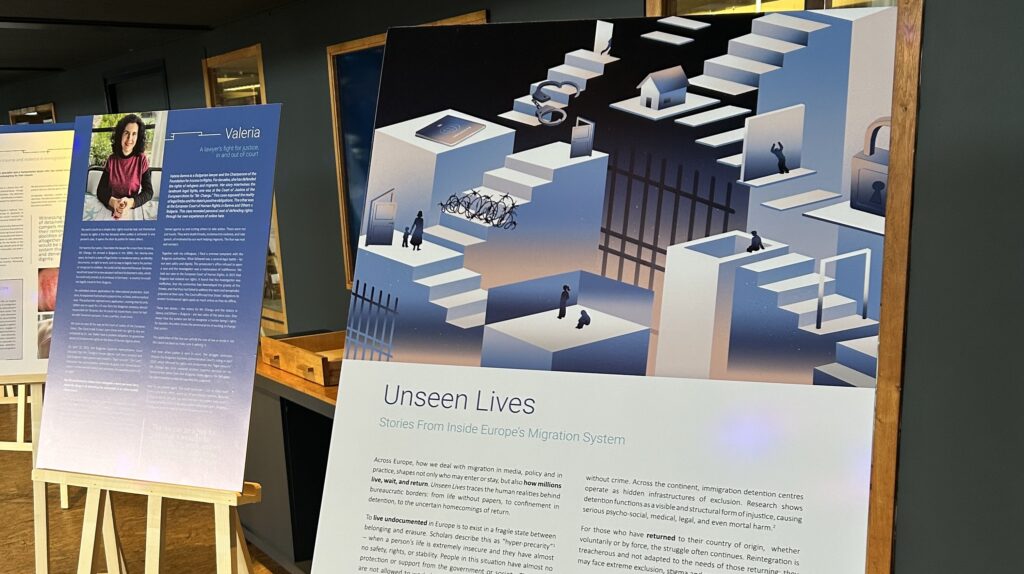
Migration is one of the most contested political issues in Europe today. Unfortunately policies and the way we talk about is shaped by political positioning rather than evidence, what we know, and the reality of the people caught inside a complex system, the refugees and asylum seekers waiting for years for a decision, their caseworkers and lawyers fighting alongside of them, the children in the system who have little agency, the doctors and people working in detention and enforcement who have to enforce policies they may not stand behind
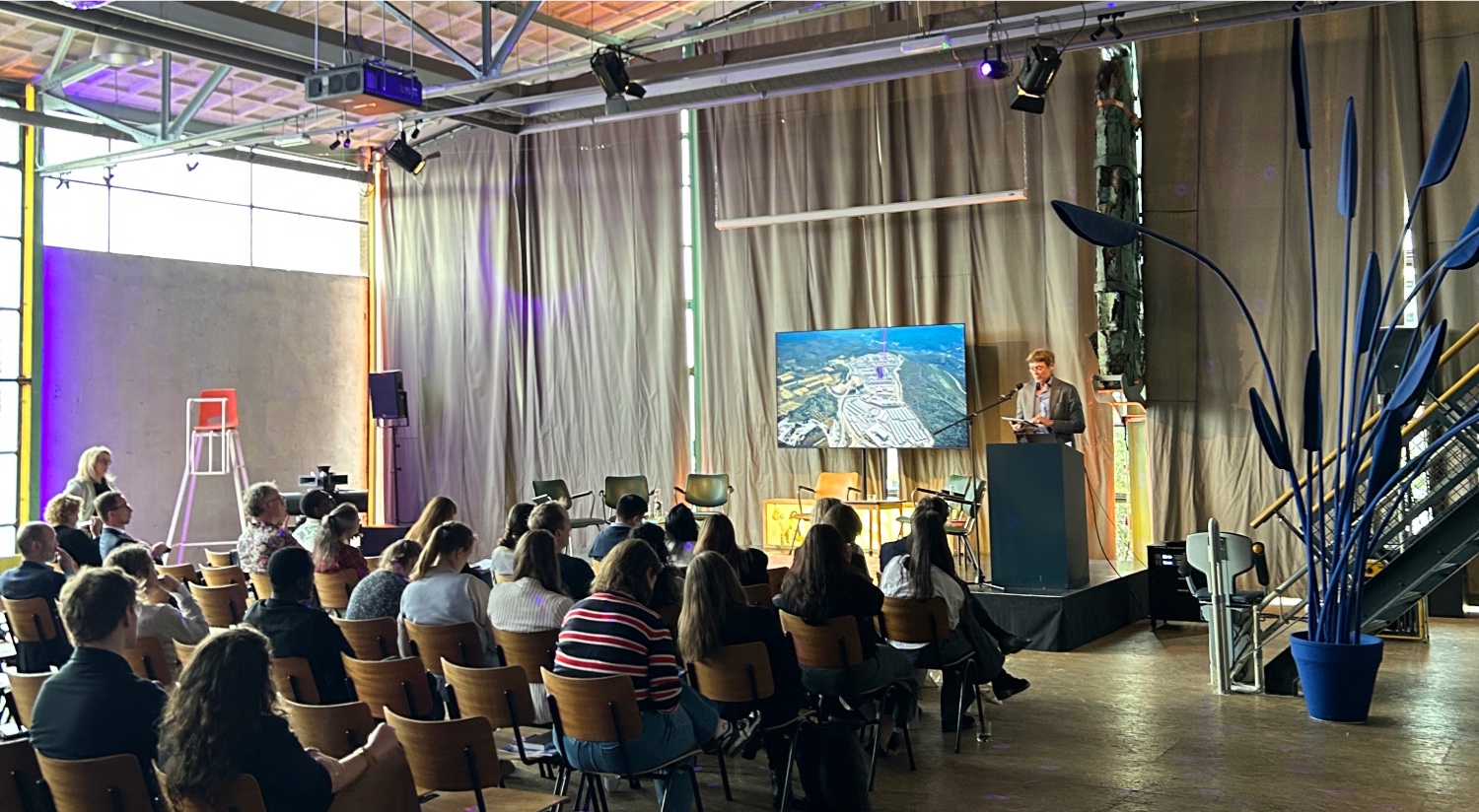
On March 13, 2026, in Rotterdam, the FAiR and LEGASY projects brought together an unusually wide range of voices to do something different: to have an honest, evidence-grounded conversation about what return policy involves, what it achieves, and what it costs. Practitioners and researchers sat alongside policymakers and immigration lawyers. People with direct personal experience of the asylum system spoke from the floor. That last element was not incidental to the event’s design. It was central to it. And it turned out to be among the most important parts of the day.
Setting the Scene: Why Language Matters
Hillmann Batuo, the event’s host, opened by naming what so many people working in this field feel but rarely say out loud. A Cameroonian-born doctor and content creator who has spent a decade in the Netherlands, he described the public discourse on migration as one that, in his experience, is ‘not so constructive.’
His aim for the day was specific and practical: not to resolve the debate, but to but to have a fair and respectful dialogue.
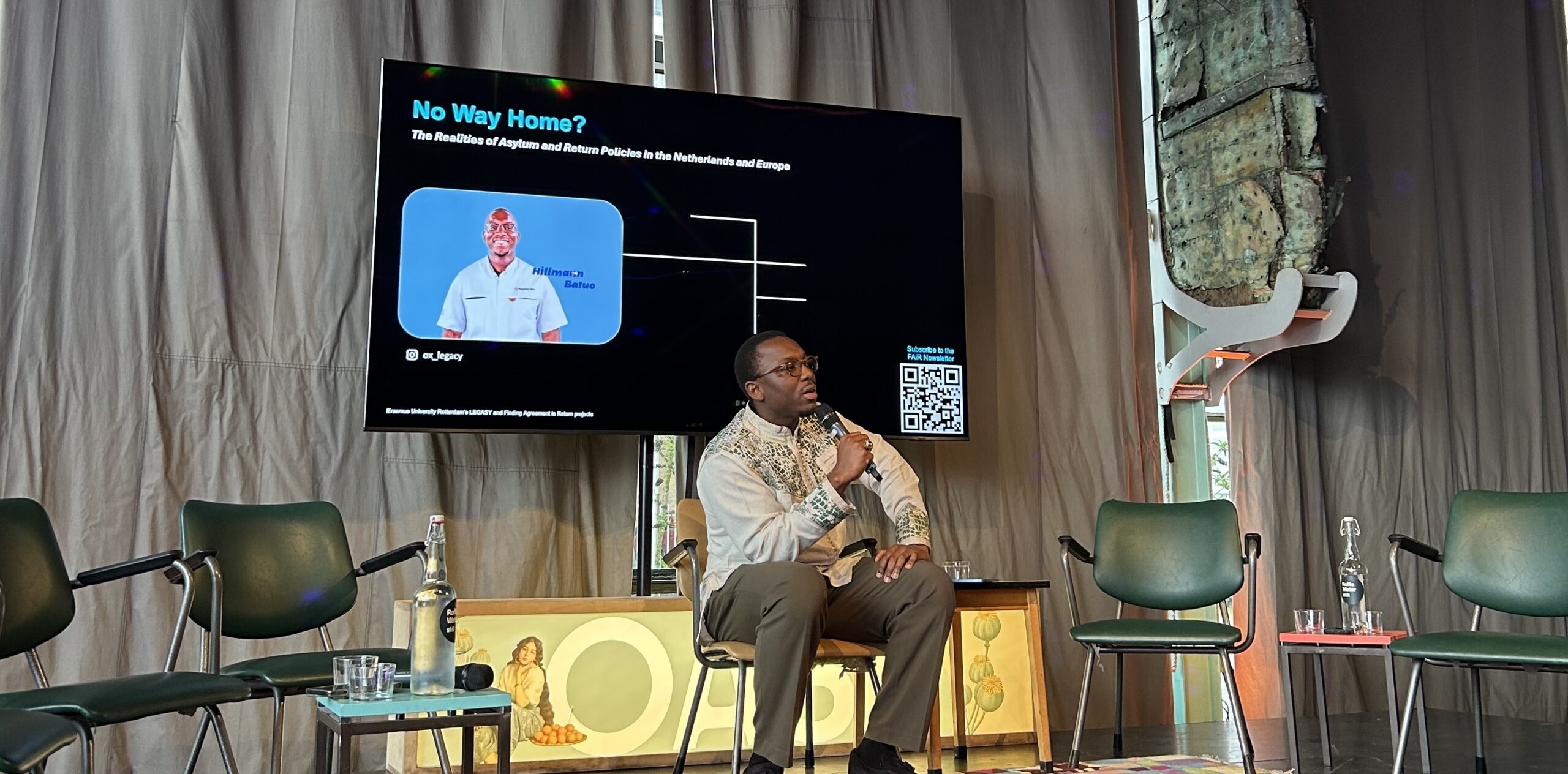
“I hope that we can at least leave here with the language to communicate this with other people, having the toolkits to be able to engage in any small way we can.” — Hillmann Batuo, host and moderator
That word “language” turned out to be one of the day’s recurring themes. Because how we describe migration processes is not merely a matter of style. It shapes how those processes are designed, how they are evaluated, and how the people inside them understand their own situation.
Claudia van der Horst, a senior official at the Dutch Repatriation and Departure Service (DTenV) with nearly 25 years of experience, offered the day’s sharpest intervention on this point. From within the institution responsible for managing return in the Netherlands, she has been pushing to retire a phrase that appears constantly in official communications and public reporting: ‘voluntary return.’
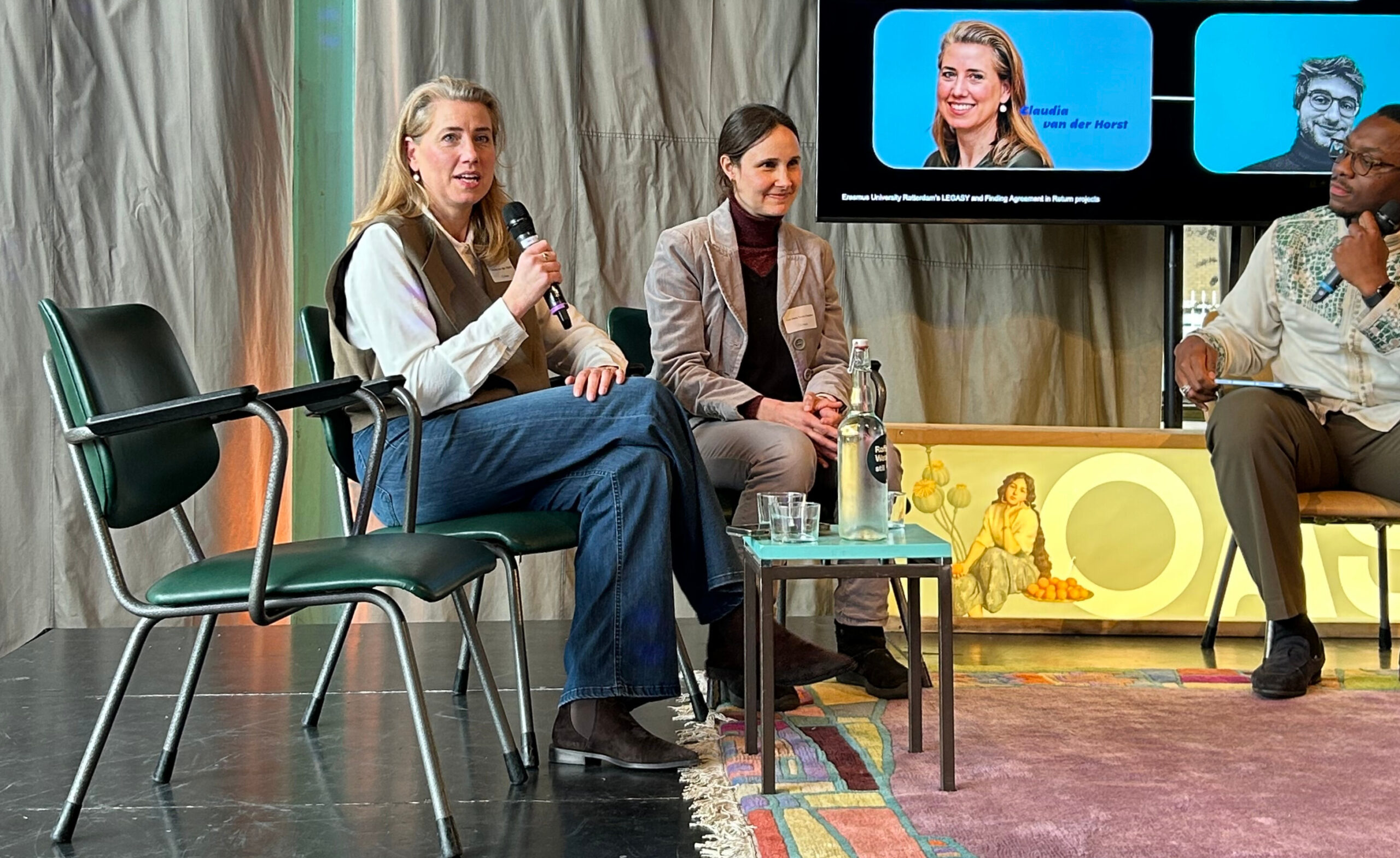
“When someone is being told to leave the Netherlands and they comply…that is not really voluntary. I’m on a mission to get this out of our communications. I prefer the term assisted return or facilitated return.” — Claudia van der Horst, Dutch Repatriation and Departure Service
The distinction matters more than it might seem. Return that happens under a legally binding return order is not voluntary in any meaningful sense: the person has not chosen freely, they have complied under legal compulsion, with detention or forced removal as the alternative. Calling it voluntary obscures a fundamental power imbalance, distorts public understanding of what the repatriation service actually does, and makes honest evaluation of the system harder. Van der Horst’s preferred framing “assisted” or “facilitated return,” acknowledges the state’s active role, the support being offered, and the legal framework within which the process takes place. It does not pretend that the decision to leave was made freely.
She was also careful to acknowledge complexity. Agency in return, she argued, exists on a spectrum. There are a small number of genuine cases where people independently choose to return, perhaps because of changes in their home country, family circumstances, or a personal reckoning with their situation. But within the caseload of a repatriation service, operating on people who have received return orders, the voluntary framing is almost always inaccurate, and using it sends the wrong signal.
The Machinery of Return: A Practitioner’s View
Beyond the question of language, van der Horst offered a detailed picture of what return management actually involves, one that is rarely visible in political debate. The DT&V was established almost 20 years ago specifically to separate the functions of assessing asylum claims and managing return; a separation designed to allow each function to develop genuine expertise.
That expertise, in the case of return, turns out to be remarkably broad. A caseworker at the DTV must navigate travel document procedures (since many people in their caseload have no documents at all), while simultaneously tracking an increasingly complex web of legal deadlines, court decisions, and procedural requirements. They must also engage with the full personal circumstances of each individual: their social networks, their family situation, the conditions in their country of origin, their physical and mental health.
“For me, the job of a caseworker is to tackle all of the factors that are limiting the possibility of return. It is not a single enforcement action. It requires expertise across many dimensions.” — Claudia van der Horst, Dutch Repatriation and Departure Service
she was also candid about the limits of what the DT&V can do. One moment from the floor made those limits viscerally concrete. An attendee wanted to share his experience with “I received a letter saying my legal status had changed while my appeal was still ongoing. No one contacted me, and I had no chance to ask questions or seek advice. I found out on paper that my situation, and possibly my future in the Netherlands, had fundamentally shifted. It was immediate and destabilising.”
Van der Horst responded directly and, notably, with an apology.
“The experience you describe receiving a letter that gave the impression your legal status was different from what you thought — that should not happen that way. The first thing we should do is ensure there is an in-person meeting to talk about the return order you received from the immigration service. I am very sorry for this. I will take your experience back and look at what we can improve.” — Claudia van der Horst, Dutch Repatriation and Departure Service
This was an illustration that the gap between reality and the system and its process can have very direct and negative repercussions on a person’s sense of security, agency, and well-being.
One of the most striking reflections came when van der Horst described how her institution’s understanding of its own role has evolved.
“We have come to the realisation that this is our issue. We have to explain to the person across the table ‘how did you come here how did we come here and take that into account in our counselling. But we also have to accept that people have their own free will, and we can only influence a small part of their decision making.” — Claudia van der Horst, Dutch Repatriation and Departure Service
The Legal Landscape: Rights, Procedures, and What’s Coming
Ali Agayev, an immigration lawyer who works daily with people navigating the Dutch system, provided the legal counterpoint to the DT&V’s institutional perspective. Where the repatriation service operatesin the interests of the state, albeit with genuine attention to individual circumstances, the lawyer’s role is unambiguously different.
“Our task is not the general interest but the interest of that one person. We serve the general interest by serving the individual interest.” — Ali Agayev, immigration lawyer
Agayev walked the audience through the structure of Dutch return law and was particularly detailed on the protections that currently exist in the Netherlands, including the provision of a government-subsidised lawyer from early in the asylum procedure, and notably worried about what the incoming EU Migration Pact, due to enter into force in June, will change.
“We are afraid that the change might mean that asylum seekers get less opportunity to make their story. Sometimes persons have already made statements without having consulted a lawyer and those statements can be used against them.” — Ali Agayev, immigration lawyer
Numbers don’t show nuance
Francesco Renzini brought large-scale survey data on what European publics actually want from migration policy, especially focusing on irregular migration. His research, conducted across 13 European countries (11 EU countries, Switzerland and the UK) with more than 16,000 respondents, uses experimental methods designed to elicit genuine preferences rather than socially desirable answers.
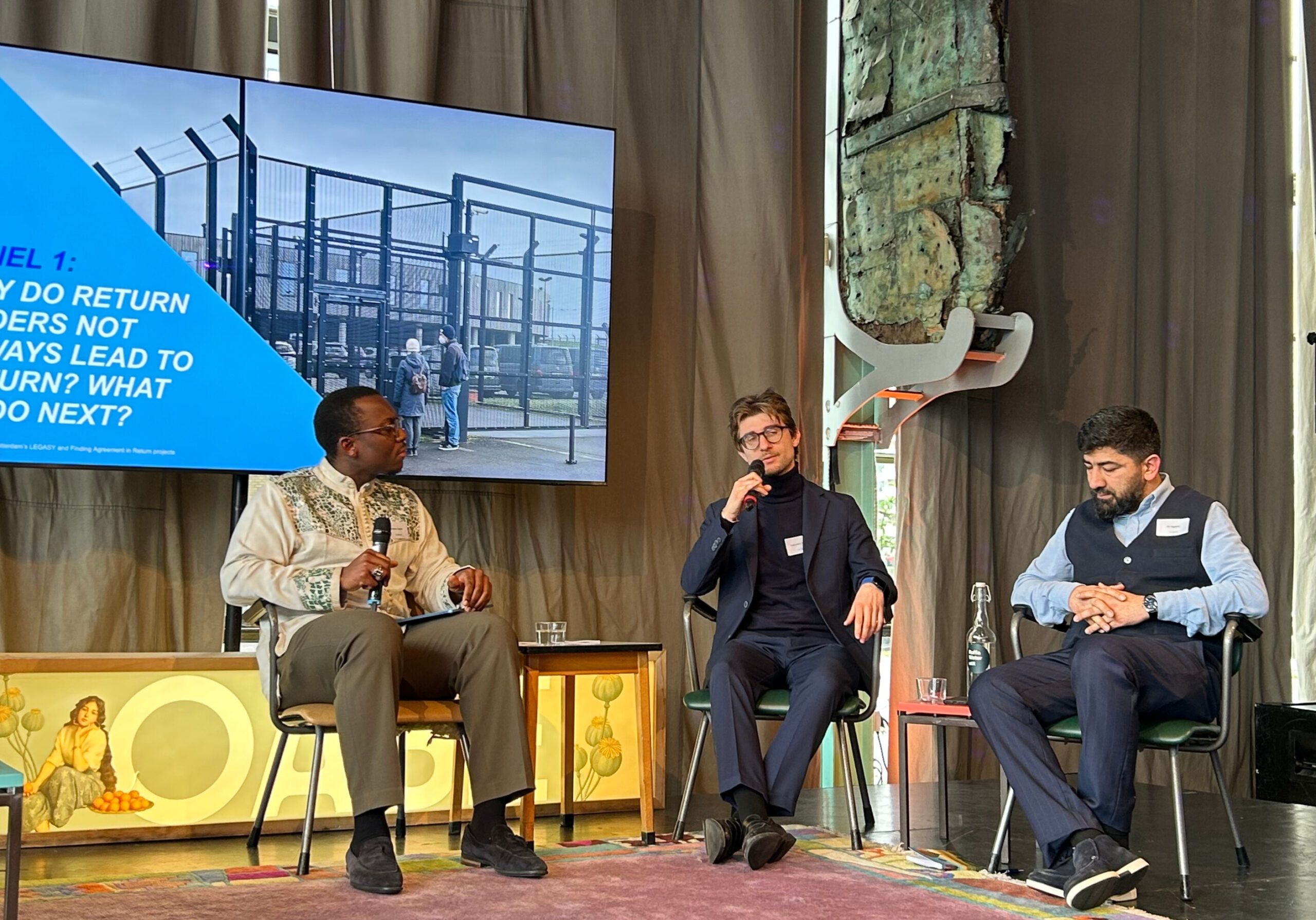
“We find that there is generally a dislike towards doing nothing, leaving irregular migrants entirely to their own devices. But on the left of the political spectrum, there is considerably more support for giving access to basic rights, including provisional healthcare.” — Francesco Renzini, researcher on computational and experimental studies
Renzini explained a general drift toward enforcement-oriented positions, mostly driven by political moderates shifting to the right. On the other hand, across southern European countries, Renzini found more support for providing basic rights, such as healthcare. Public opinion may be less uniformly hostile to humane approaches than what we often hear in the debate.
Legitimacy: The Research That Changes the Equation
Ana Maria Torres Chedraui presented findings that go to the heart of how migration systems function, or fail to. Surveying approximately 1,200 residents of Dutch asylum reception centres, she and her colleagues examined how asylum seekers perceive the fairness of the procedures they move through, and what effect those perceptions have on their behaviour and wellbeing.
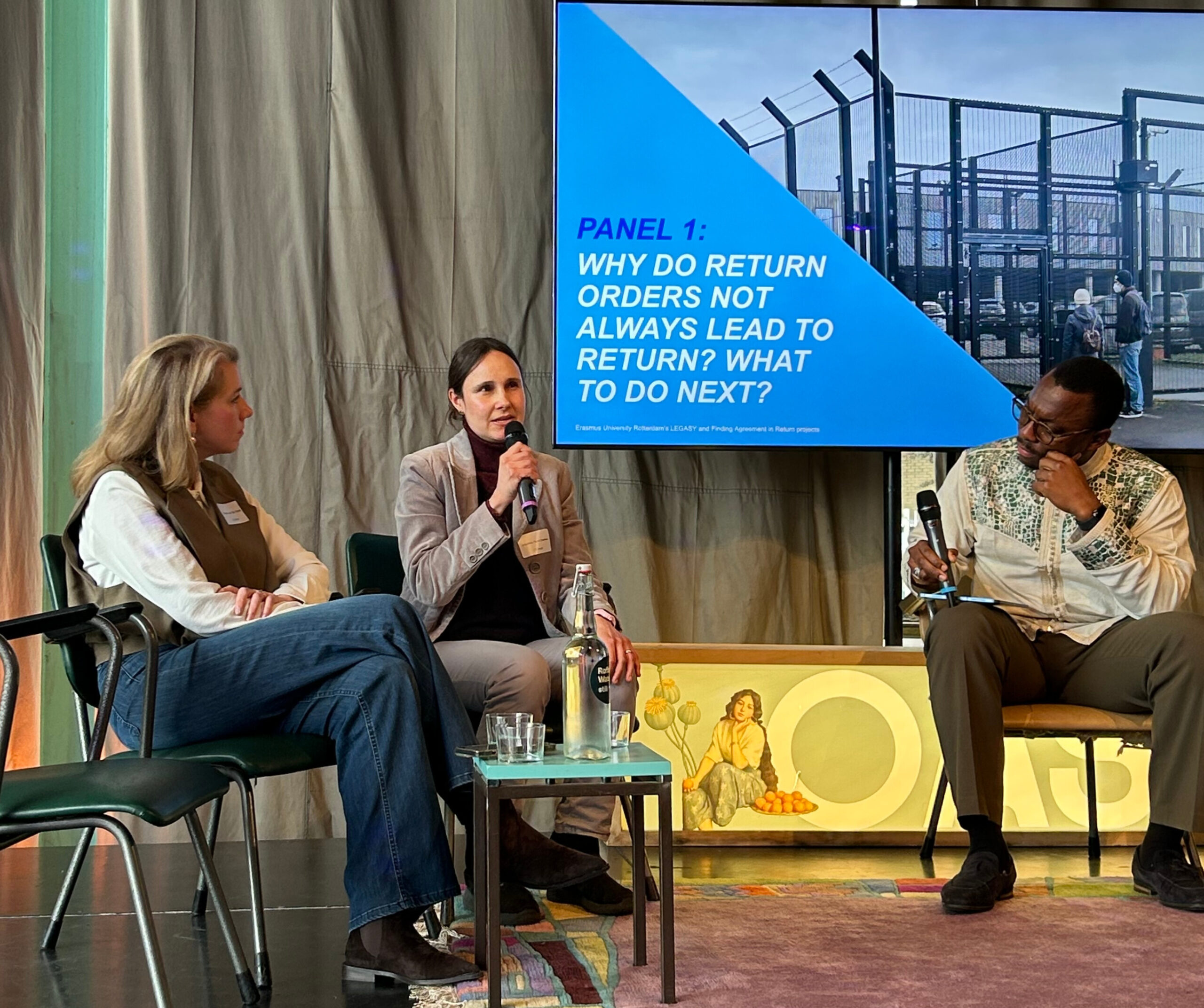
“When asylum seekers perceive the procedure as impartial and unprejudiced, and when they feel they have been treated with respect — their wellbeing is higher. And they are also somewhat more likely to accept a return decision as a legitimate outcome that they should follow.” — Ana Maria Torres Chedraui, asylum seeker perceptions researcher
This legitimacy effect (the perception that a process is fair increases acceptance of its outcomes, even unwelcome ones) has direct implications for policy design. Investment in the quality of asylum procedures is not only a moral obligation. It is a practical investment in the functioning of the system. Torres Chedraui also found that return intentions are connected to conditions in the country of origin: when people perceive their home country as safe and their prospects there as reasonable, they are more likely to consider return, a finding that links return policy inextricably to foreign policy and development cooperation.
One of the guests who had been through the process himself put the human dimension of this finding into words that no survey could fully capture. He described what it felt like to lose his job, to experience seven months of serious mental health difficulties, and to move through that period feeling entirely invisible to the institutions around him.
“Nobody cared about my story. Nobody cared about who I am. When you are undocumented, you cannot do anything in your life. Sometimes you just have to be empathetic about who a person was, and how they became who they are.” — An attendee who had been through the Dutch asylum procedure
He was not asking for special treatment. He was asking to be seen as a person. That is, in essence, what the legitimacy research is also saying: that the experience of being treated as a human being (with a history, a set of circumstances, a future) is not separable from the effectiveness of the system that processes the cases of asylum seekers.
On the Ground: Rights & Pragmatism,
Rian Ederveen, who has spent over 35 years working with undocumented migrants through the national support centre in the Netherlands, spoke from the perspective of an organisation that exists precisely to serve people the system has left behind. Her starting point on return policy was honest: it is not her organisation’s primary concern.
“As NGO’s we serve our clients. Most don’t want to return. But of course some do, and for them there should be real opportunities and support. It is not easy to restart life in a country that you thought you left forever.” — Rian Ederveen, national support centre for undocumented migrants
What she described instead was the reality of what her organisation encounters: people living on the street; children who cannot access school because their parents are afraid that the school will report them; people with serious health conditions moving through a system that cannot see them clearly enough to help. The work of her organisation is premised on the idea that human beings in the Netherlands have rights regardless of their legal status, and that meeting those rights is both a moral and a practical imperative.
“We don’t want people to die on the street. And we have found that if you invest in prevention: if you maintain contact, if people trust you — then you are also more likely to be able to have a real conversation about their situation, including about return.” — Rian Ederveen, national support centre for undocumented migrants
Harsh enforcement does not necessarily lead to more people returning to their country of origin. When people fear that any contact with authorities will lead to arrest or removal, they withdraw from visibility entirely, becoming harder to reach, harder to counsel, harder to support in any direction, including toward return.
One guest showed a perspective that we don’t often see. He came to the Netherlands as a young child, a refugee by circumstance and not by choice, and returned as an adult to visit his family in Somaliland. What struck him was not his own experience of return, but the situation of those he met there who had never left: people who, if they fell seriously ill, could not travel abroad for medical treatment. They were trapped not by walls, but by the absence of a passport and borders.
A relative, seeing him with his Dutch travel document, made a joke: give me your passport. You stay here. It captured something serious. The ability to travel: leave and move freely and safely, with the guarantee that you can always come back — is something most Europeans take for granted. For many people around the world, these privileges do not exist at all.
If European governments genuinely want refugees to return to their countries of origin, the most effective thing they could do is not increase enforcement, he argued, it to allow mobility. A person who holds a Dutch passport or a legal travel document with international recognition, will consider going home because they know they have the freedom to leave again if circumstances required it. The perilous, one-way nature of the journey to Europe is not an accident of geography. It is a product of the document regime he argued. Change the document regime, and you change the calculus of return.
“If you want people to go back, give them the freedom to move. Give them the security of knowing they can leave their countries again if they need to. I guarantee more people would return. But the conversation is always only about the stick.” — An attendee brought to the Netherlands as a child refugee
The City That Demonstrates What Works
Jan Braat, a senior policy adviser on migration and inclusion, spoke from a position that is unusual in the Dutch context: Utrecht is one of the few cities in the Netherlands, and among a small number globally, to have formally adopted the status of Human Rights City. Since 2010, the city has embedded the universal framework of human rights into its local governance, establishing a Local Human Rights Coalition that brings together NGOs, civil society organisations, politicians, policy officers, businesses, and scientists.
Braat emphasised that Utrecht’s approach is grounded in a formal commitment to human rights, embedded in how the city governs and develops policy. Rather than relying solely on shifting political priorities, this framework provides a consistent basis for decision-making over time.
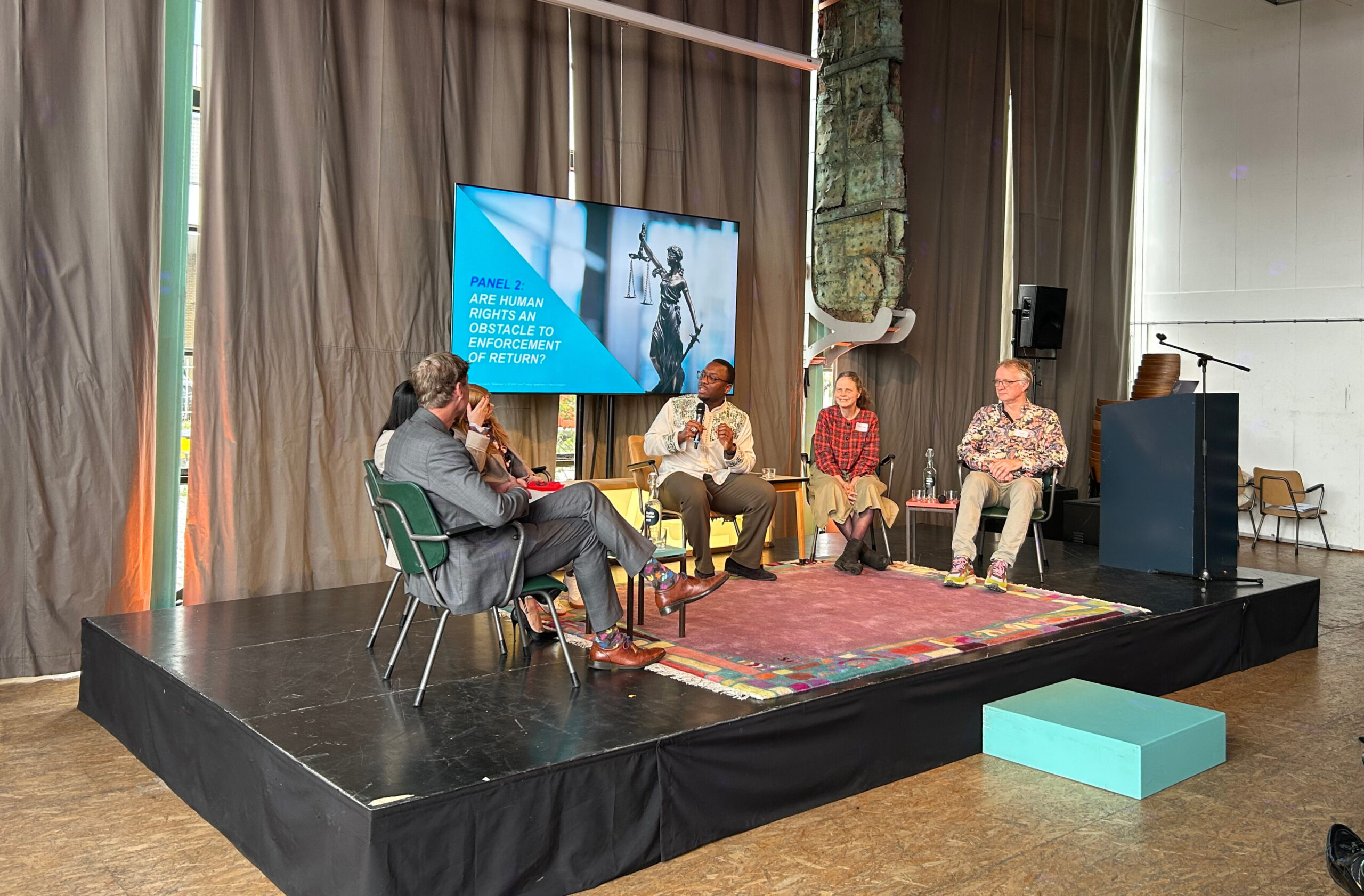
“If you invest in homelessness prevention and that costs six million, it will save you at least twelve million. We can demonstrate, with our data, that this approach works and that it is cost-efficient. And then it becomes possible to bring politicians with you — even those who are not instinctively sympathetic.” — Jan Braat, senior policy adviser on migration and inclusion, Utrecht
While cost-efficiency can help build broader political support, it is not presented as the starting point of Utrecht’s approach. The foundation is its Human Rights City commitment: the principle that rights are a baseline for all inhabitants. Financial benefits may follow, but they are not the primary rationale.
Braat was also candid about the governance frustration beneath this success. Local governments are dealing with the downstream consequences of national and European policy decisions they had no role in making. When asylum procedures are tightened, when legal aid is cut, when return timelines are accelerated, the people affected do not disappear. They end up in municipal services, in city-funded shelters, in emergency healthcare.
“We are working with the end result of ill-equipped policies. It ends on our streets and we have to deal with it. And our experience and our empirical data are not being taken into account.” — Tabasum Westra-van Til, spokesperson Asylum of a coalition party and migration researcher, University of Amsterdam
His call was for stronger coalitions between municipalities, and for a more systematic way of bringing local evidence into the rooms where policy is made. Utrecht’s Human Rights City model offers one template for how that might work: not simply as a set of local practices, but as a framework that can be shared, replicated, and used to build political support across different contexts.
Human Rights: Not an Obstacle, but a Foundation
Sonya Taheri, an Iranian-born immigration lawyer, approached the human rights question from first principles. Having grown up in a country where basic rights are not guaranteed, she described her understanding of rights not as legal instruments to be weighed against other interests, but as the prior condition for any legitimate legal system.
“The only laws that actually exist are the universal rights and the laws of nature that all people should have. Borders are created by states — they are interpretations of the mind. That is why it is so important that there are lawyers who defend those basic human rights.” — Sonya Taheri, immigration lawyer
In practice, Taheri works with clients who often do not know what rights they have. Children under 18 always have the right to education in the Netherlands, regardless of their parents’ status. Undocumented people have the right to access a doctor. These are not widely known facts, and their ignorance has real consequences.
Her most urgent remarks came in direct response to a question from the floor, from a guest who identified as part of the LGBTQ community and who described being unable to produce documentary evidence of their identity or the risks they face in their country of origin. She asked, with considerable vulnerability, what options exist when you cannot prove who you are or what you fear, and what it means when European countries consider sending people back to Uganda, where same-sex relationships are not merely criminalised but can carry the death penalty.
Taheri addressed the legal question directly, explaining that consistency of testimony, even without documents, can be sufficient for an asylum claim, and that credibility assessments are meant to take account of the specific difficulties faced by LGBTQ applicants in producing evidence. She also noted that if a case has dragged on for years without resolution, there are legal avenues to pursue compensation through the courts, a form of pressure that applicants rarely know they possess.
But she did not stop at the legal mechanics. The question from the floor had made abstract policy suddenly, unmistakably human, and she named what was at stake directly.
“You cannot take a person against their will and send them to a country they have no ties to. That is one of the most violent violations of human rights. And when we talk about countries like Uganda — where LGBT people can face the death penalty — how can we send people back there and say that this is safe? These are my clients. This is not abstract.” — Sonya Taheri, asylum lawyer
The exchange was one of the most charged of the day. Proposals circulating at European level to designate certain countries as ‘safe third countries’ for return, or to send asylum seekers to countries they have merely transited, are not, in this room with this person in the audience, theoretical constructs. They are decisions that will determine whether humans live or die.
The Micro-Physics of Deportation
Antonella Patteri, a researcher who has spent years studying deportation practices across Europe, brought a perspective that is rarely present in policy discussions: a close, empirical account of what deportation actually looks like at the level of individual experience and institutional practice: what she calls the ‘micro-physics’ of removal.
Her research examines the specific moments, spaces, and interactions through which deportation is carried out, and the ways in which the language of dignity and human rights is deployed within those processes – in practice aiding the aim of avoiding that deportees’ resist their deportation. Her findings are unsettling.
““Authorities in some countries practice unannounced deportations — not telling the person they are being deported until they find themselves at the airport — because of human rights. Because they don’t want the person to do something that could harm them. They are using the language of dignity to justify a practice that is, by any reasonable measure, deeply undignified.” — Antonella Patteri, researcher
This instrumentalisation of rights language, using the vocabulary of dignity and protection to describe practices that remove agency and choice, Patteri argued, a growing phenomenon that deserves much closer scrutiny. The digitisation of asylum procedures, including the use of AI tools to assess the credibility of applicants, raises similar concerns: the appearance of procedural rigour masking processes that are, in practice, opaque and difficult to challenge.
The Assumptions Policymakers Make
Simona Vezzoli, presenting findings from the PACES project, examined the assumptions baked into migration policy design, specifically the idea that migrants respond predictably to policy signals. Her research finds that policy is built on caricatures: irregular migrants assumed to be uninformed and impulsive, high-skilled migrants assumed to be hyper-rational calculators, and asylum seekers largely invisible to the design process altogether.
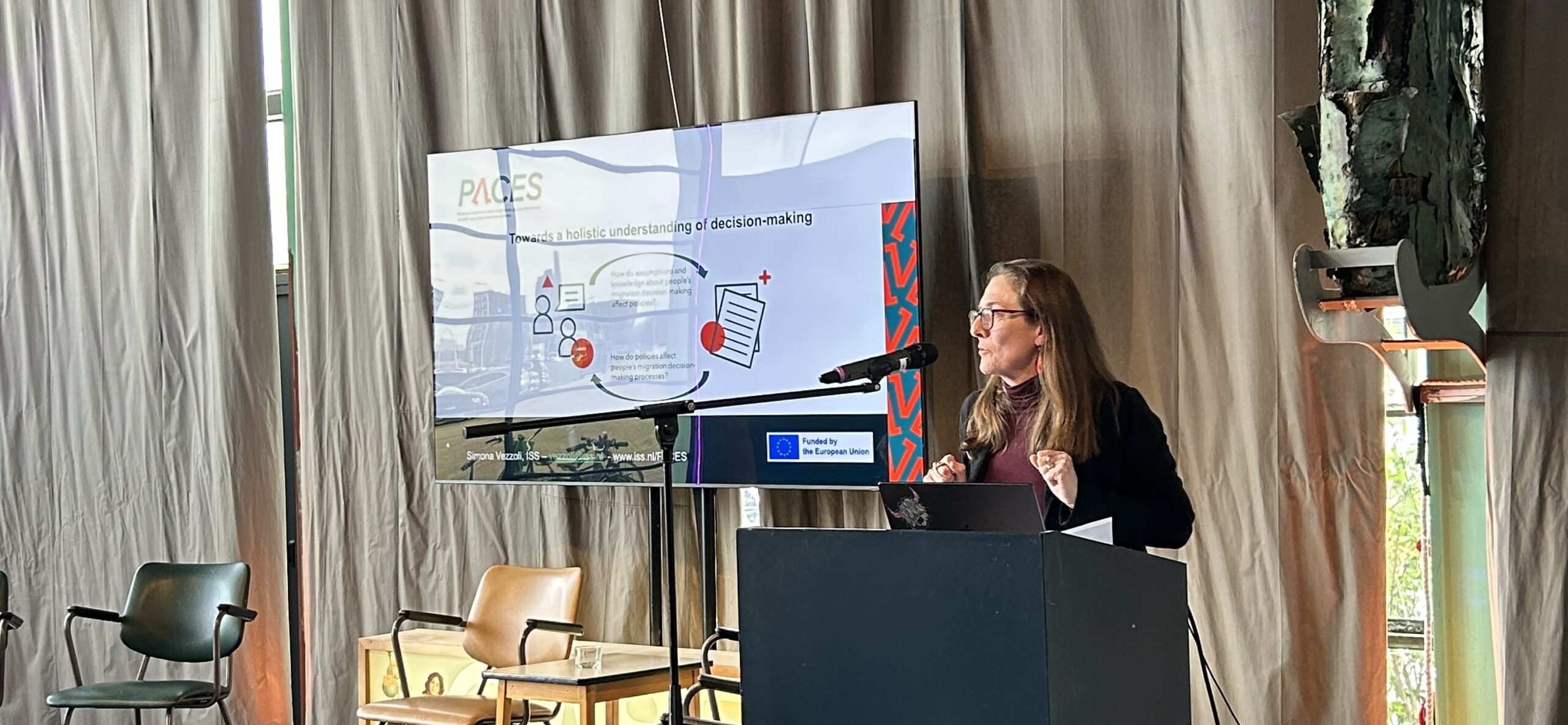
“Migration policies are so difficult to understand, even for us as migration scholars. Why do we expect that migrants will simply abide by them?” — Simona Vezzoli, PACES project Principal Investigator
In reality, when people make decisions to migrate, they are doing so on the basis on a wide range of factors – including lack of security, shattered livelihoods and educational aspirations – and much less thought is given to migration policies. The practical implication is significant: the window of opportunity for policy to actually influence migration decisions is much narrower than policymakers typically assume. And citizen attitudes, she found, are more varied than political discourse suggests: many Europeans in the six countries surveyed1 support some form of regularisation, and the loudest voices in the debate do not necessarily represent the median view.
Syrian Youth in Turkey: A Window on Vulnerability
Müge Dalkiran, presenting recently published research with Dr. Pelin Kılınçarslan and Prof. Ahmet İçduygu from the Migration Research Centre at Koç University in Istanbul, offered a reminder that the populations most affected by European migration policy extend far beyond Europe’s borders. Their research focuses on Syrian youth in Turkey — approximately two million people, the majority young, many born in Turkey and therefore neither fully Syrian nor Turkish in their sense of identity.
What their research illuminates is the complexity of vulnerability as a dynamic condition, shaped by legal status, economic circumstances, access to education, discrimination along with innate conditions. Even among those in the formal UNHCR resettlement process, the experience of discrimination is reshaping their understanding of what protection means.
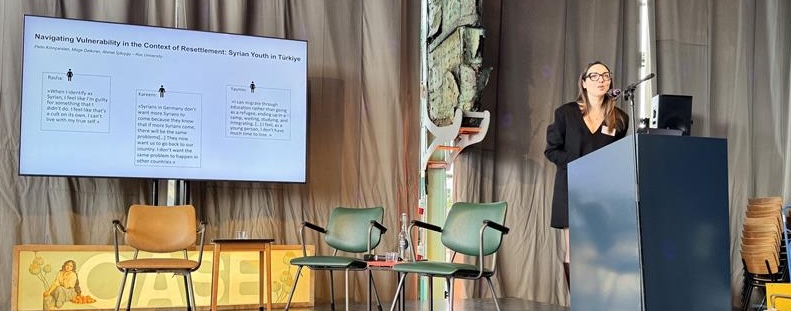
“Some of them no longer see the EU as a space of protection or non-discrimination. They put Europe and Turkey together, as places where discrimination is everywhere. And they have started to feel guilty about their identity as refugees — as if being a refugee is something to be ashamed of.” — Müge Dalkiran, Migration Research Centre, Koç University
If the people most in need of protection are coming to see the protection system itself as part of the problem — as another arena of exclusion rather than a genuine refuge — then the legitimacy of the entire framework is at stake.
A New Tool for Measuring What Matters
Leea Lacatus, a master’s student working in collaboration with the FAiR project and the Migration Policy Group, presented early findings from MIREX, a dataset tracking the rights of irregular migrants across countries, not just on paper, but in practice. MIREX allows for cross-country comparison of where gaps between policy and reality are widest, and where progress is being made.
“We can see where there is more work to be done. And with this data, we can start to ask better questions: why are these rights respected in some places and not in others? What can be done about it?” — Leea Lacatus, master’s researcher
It is exactly the kind of tool that is missing from much migration policy debate: granular, comparative, and focused on outcomes rather than intentions.
Closing: The Legitimacy of the Whole System
Arjen Leerkes, the FAiR project’s principal investigator, was given the last word, and he used it carefully. His closing remarks moved outward from the specifics of return policy to the broader question of what is at stake when migration governance fails to command public trust
He described the current moment as one of profound tension: between the political pressure to demonstrate control and the practical limits of what any policy can deliver; between the rights of people fleeing persecution and the sovereignty of states to regulate their borders; between the short-term logic of deterrence and the long-term requirements of an effective, cooperative system. The risk, he argued, is an expectation trap: a cycle in which political promises outpace policy capacity, public frustration grows, and pressure mounts for ever more radical solutions.
“When politics promises more control than policy can realistically deliver, frustration becomes inevitable. And that frustration risks undermining trust not just in migration policy, but in democratic institutions more broadly.” — Arjen Leerkes, FAiR principal investigator
His answer was not a counsel of despair, but a call for realism and honesty. Effective return policy, he argued, combines legal enforcement with more voluntary forms of cooperation. It also requires recognising the limits of what such policies can achieve, including that not all return decisions can be implemented in practice. This makes cooperation with countries of origin essential, and that cooperation depends in part on policies being perceived as fair. It also requires being transparent with citizens about what is and is not achievable.
“Migration policies work best when people believe they are fair — citizens and non-citizens, officials and migrants alike. Legitimacy is not a soft concern. It is the practical foundation on which the whole system depends.” — Arjen Leerkes, FAiR principal investigator
He closed with an image from Eurovision: a singer who came to the Netherlands as a child refugee from Congo and went on to represent the country internationally. A comment under the broadcast had said: he came as a refugee. Now he represents our country. That is something to be proud of.
It was a deliberate choice of ending. Not to sentimentalise migration, or to suggest that every difficult story resolves into a success. But to insist that migration policy is ultimately about people, about lives that unfold in ways that cannot be predicted or controlled, and that the societies strong enough to hold that truth alongside the genuine complexities of governance are the ones most likely to get this right.
The conversation that began in Rotterdam, among researchers, lawyers, policymakers, practitioners, and the people who have lived these experiences firsthand, needs to continue. The FAiR project intends to keep it going.