


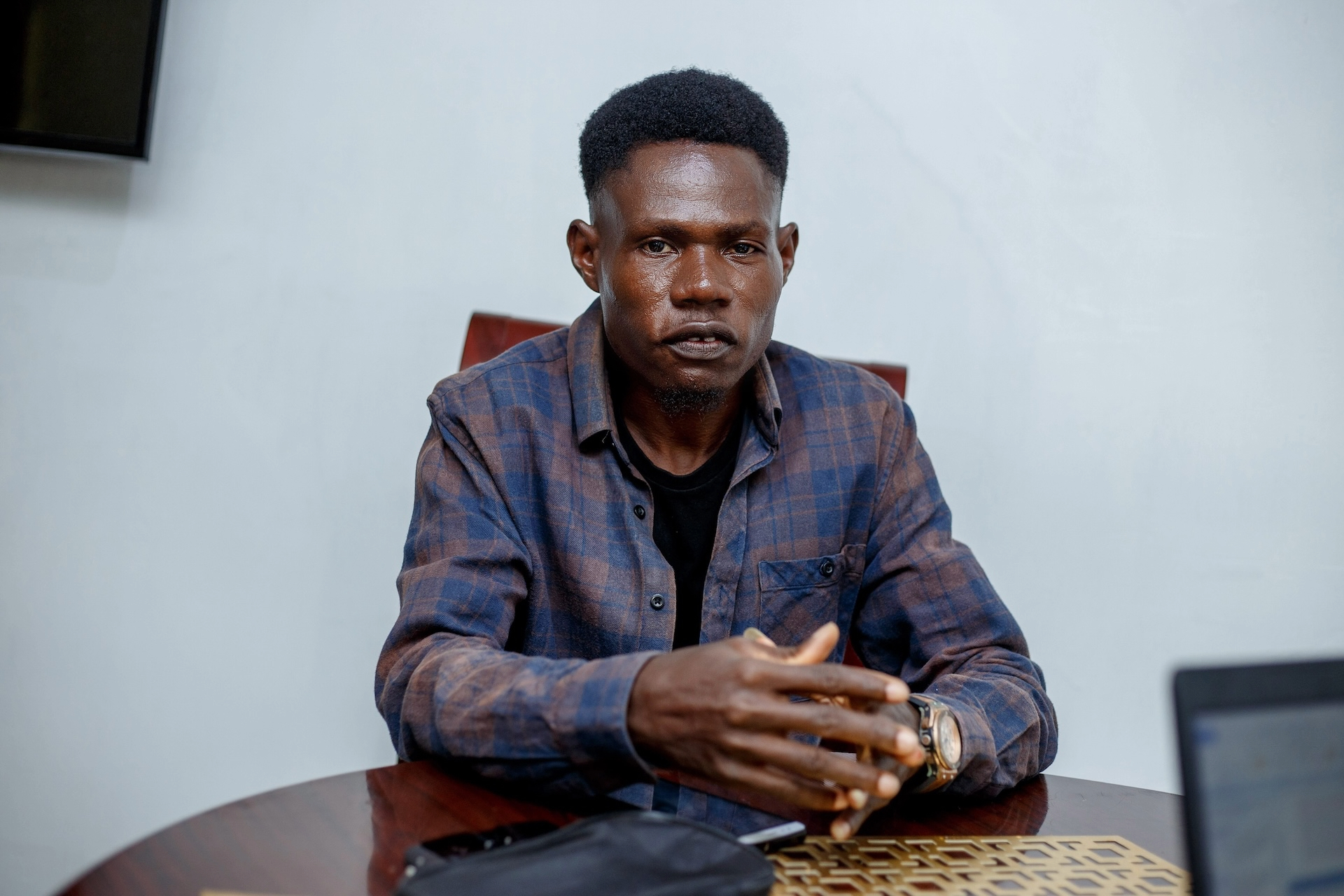
“I believe that people who return like me have a role to play as awareness builders and campaigners.” – By Efosa as told to Samuel Hall Team | Photographed by Ofure Ighalo
I was born in 1980 and raised in a peaceful Christian family in Nigeria. Faith and strong values were the foundation of my life, and those early lessons still guide me. They shaped who I am today: a manufacturer, a mentor in my church, and someone who speaks openly to young people about the dangers of irregular migration.
In 2016, when the economic situation became hard, I sold my belongings and decided to look for a better future overseas. I wanted to support my family, stand on my own, and one day be an employer others could look up to. That was my goal when I left. But the reality of my migration journey in 2017 was nothing like what I imagined.
The moment I entered the sea is the moment that changed everything. Our boat developed a fault in the middle of the water and we were stranded for more than four hours. That fear has stayed with me. But what came after was even worse. I ended up in Libya, and life became empty. I felt I would not make it again in my life.
I faced inhuman treatment. I didn’t eat for weeks, and when I finally received food, it wasn’t nutritious. The water tasted salty, but I had no choice but to drink it. I had no freedom of movement, no way to earn money, no path forward. I was stranded “in every way,” with no dignity, no hope. I decided to return, not because I wanted to give up, but because staying meant I would die.
I returned to Nigeria in July 2017. I came back with nothing. Some people received me well, but others kept their distance. They knew I had to start over, and some friendships ended. It was painful, but it also showed me who remained beside me.
What made rebuilding possible was the support I received from the International Organisation for Migration and the state government of Godwin Obaseki. The training and assistance helped me bounce back. I was able to put food on my table again, become self-employed, and start a manufacturing business. Without that support, my dream of being a manufacturer would have died.
Alongside my business, I also serve as a mentor in my church and community. I grew up in a Christian family, and I believe God kept me alive during that journey. Because of that, people look up to me.
I began speaking to young people immediately after I returned from Libya. I talk to them about safe migration — that if they must travel, they should do it the regular way. I tell them to know where they are going, have information, understand the country, and have money. Not to wake up and start trekking through the desert because of what they see on social media.
I share my experience at community gatherings. In Upper Sakponba, Benin City, when I speak, people often say, “You mean you passed through this hardship?” My story scares them, in a way that makes them think twice. Some change their minds about migrating irregularly after hearing it.
Young people today want quick money. What gets through to them is showing that they can also make it here in Nigeria, that opportunities exist if they focus and make informed decisions. For returnees who are struggling, I tell them to associate with people and keep pushing. You don’t know where help will come from, just like I didn’t know it would come for me.
I believe those who have returned should receive full support, whether it’s from private individuals, the government, or the media. Without this support, it’s difficult to move forward. When someone asks if I would travel again, I tell them it’s not worth it, especially considering the racism and struggles faced overseas.
Today, I balance my manufacturing work with mentoring others. I can only speak from my own experience, but I believe returnees like me have a role to play — not to degrade ourselves, but to prevent others from going through the dangers we faced. With proper support, people who return can rebuild and contribute meaningfully.