


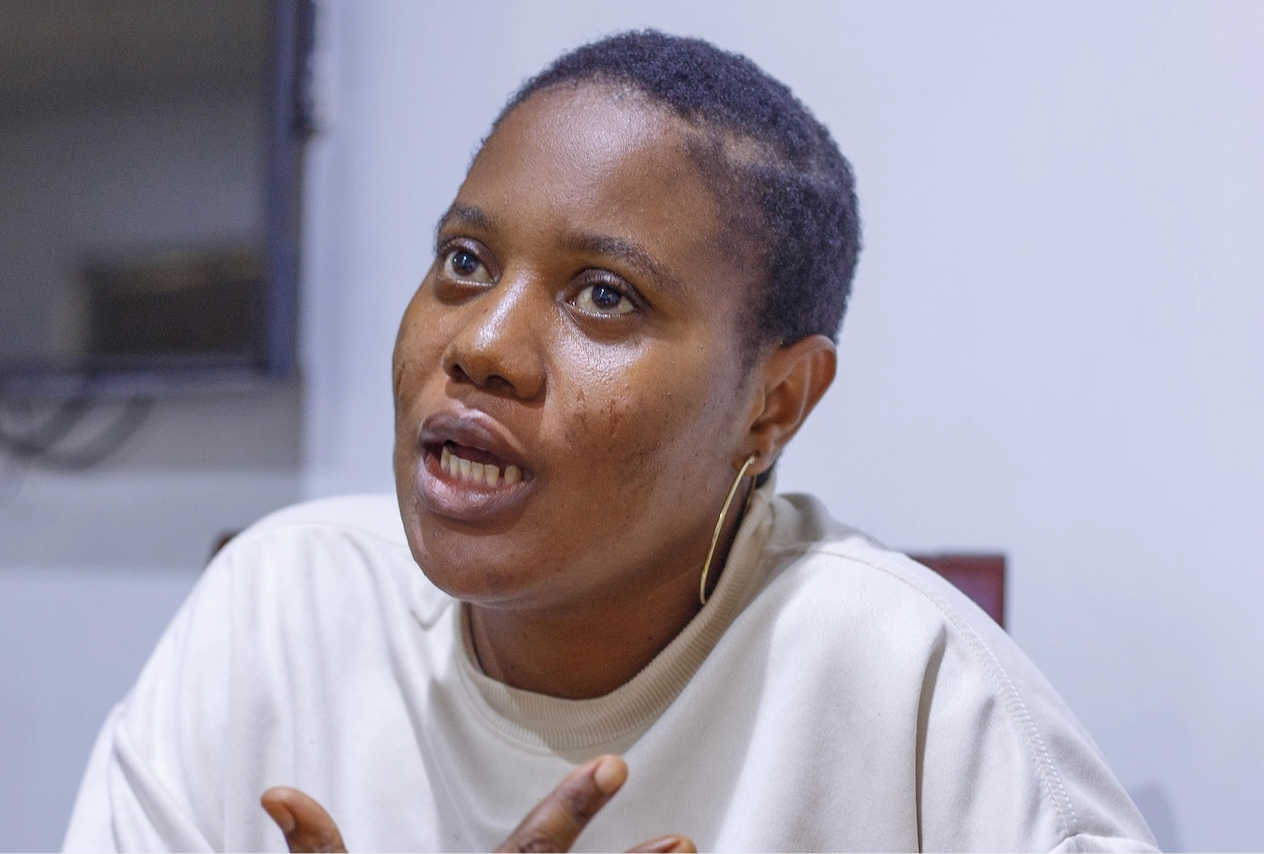
“If migrants return or are brought back, they should be empowered, not stigmatised in public.” – By Odion as told to Samuel Hall Team | Photographed by Ofure Ighalo
I was born in 1994 as the first child in a poor family. Being the eldest meant I carried a lot of responsibility from the start. My mother sold food to support us. My father had an injury at work, which made things even harder. I learned hairdressing because I wanted to help change our situation. During my training, someone suggested I could go to Libya by road. I agreed, hoping that if I made it, I could support my family.
My journey started in August 2017 when I left Benin. From there, we travelled to Kano State, then to Zamfara State in northern Nigeria. We crossed into Niger on a motorcycle. The trip was extremely hard. From the border towns in Niger to Agadez, we went days without food or water while crossing the desert. People struggled. Some passed out. It was a journey I had not imagined in this way.
Before we reached Agadez, I was arrested. The conditions felt like slavery. I did not know where I was going or what they would do to me. I had heard many bad stories, so my imagination alone felt like torture. I prayed for it to end quickly. I spent six months away in total, and the experience was like hell.
In September 2017, Nigerian immigration came and took us back home. I had nothing left because I had sold my belongings before leaving. I was taken to a shelter and received care there. By October, I was reunited with my family. They were relieved to see me alive. That part helped, but emotionally, I was still adjusting.
People’s reactions were mixed. Some treated me well. Some treated me badly. Some kept their distance. Even though I didn’t tell many people — mostly only my mother and close relatives knew — people around me formed opinions anyway. When others asked where I had been, I said I went to Lagos to see my aunt. But over time some people found out the truth, and I know they must have had their thoughts. Maybe they believed that if I had succeeded, I would have lifted the family out of poverty. Others assumed I went abroad for prostitution. Those assumptions affected me emotionally. Even when people didn’t confront me directly, their behaviour changed. It affected my confidence, but with the support of those who stayed close, I kept moving.
During that time, my mother passed away due to high blood pressure from worrying about what I was going through. That loss shaped a lot of how I see my experience now.
Girls’ Power Initiative (GPI) and COSUDOW helped me rebuild. They provided funds to open a shop and buy equipment for a hair salon. They paid my rent for a year. They gave me counselling. Hearing stories of people who had gone through the same thing and settled back successfully made a big difference. It helped me see that my life wasn’t finished.
Managing the shop hasn’t been easy, but I do my best. I also focus on my children. They are young, and I can’t leave them for their father to care for alone. My life now is about them as much as it is about me.
I talk to young women when I can. I tell them it’s a bad idea to take the irregular route. Many of them believe the success stories they hear, and they think people like me failed because of something we did wrong. But I explain what I saw — and I show them news articles about people being sold in Libya. I don’t say these things to frighten them, but to give them information they don’t have.
When I see how returnees are shown on TV — lining up for handouts — I understand why society sometimes sees us as lazy or dependent. But that is not the truth. People who return have experiences that can save others from going through the same pain. We should be empowered, not displayed as failures. Conversations should happen privately within the organisations supporting us, not in front of cameras.
The stigma is real. Even when people don’t say it, you feel it. That has shaped my reintegration more than anything else. But with support from the organisations that stood by me, and the people who didn’t judge me, I have kept going. I rebuilt my life once, and I continue to build it every day.