


8-9 October 2026 | Switzerland
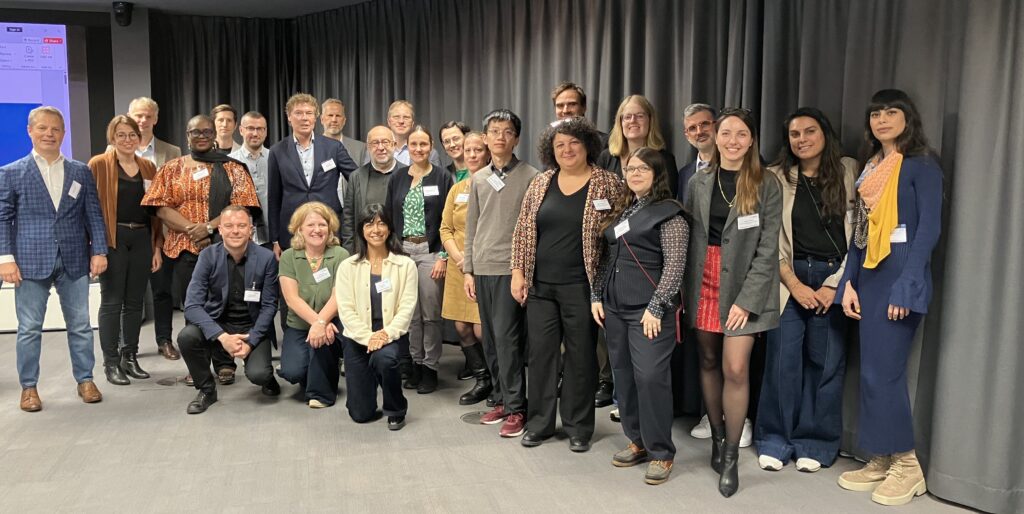
Researchers, policymakers and practitioners gathered at the Geneva Graduate Institute on 8–9 October 2026 for the Final Event of the EU-funded Finding Agreement in Return project. Themed “Return Policy at a Crossroads – Perspectives from the FAiR Research Project,” the two-day event reflected on three and a half years of FAiR research and its implications for European return policy and practice. Three overarching messages emerged from the discussions: First, respecting human dignity must remain an objective in its own right, especially in the European context. Second, effective return governance requires legitimacy in the eyes of migrants and countries of origin and transit, whose perspectives and interests need to be taken seriously. Third, governments must be realistic about the limits of return policies and adopt a broader understanding of effectiveness, which includes addressing persistent non-return and preventing prolonged situations of legal uncertainty.
Set against the backdrop of the EU Pact on Migration and Asylum’s implementation and the adoption of the new EU Return Regulation, the event brought together representatives of governments, European institutions and agencies, international organisations, civil society and academia. Presentations of FAiR findings and moderated panels covered five interconnected areas: intergovernmental return frameworks, everyday return dynamics, fundamental rights monitoring and accountability, alternatives to return, and the future of European return policy.
Day 1
Opening the discussions on return diplomacy, panellists noted that return cooperation involves balancing competing priorities, both between governments and within their own institutions. FAiR research showed that a whole-of-government approach can make cooperation more successful by allowing countries to respond more flexibly to their partners’ priorities, provided the authorities involved coordinate closely. Speakers also stressed the importance of building trust, maintaining dialogue and developing a shared understanding of priorities between authorities, rather than focusing disproportionably on negotiating return and readmission agreements. Observing dynamics in intergovernmental relations, a panellist asserted that “effective return diplomacy requires trust and shared understanding of priorities and can only be achieved through dialogue.” Panellists also highlighted that humane and dignified returns and adequate reintegration support are essential for sustainable outcomes.
The experiences of returnees and practitioners took centre stage in the second panel, which highlighted the gap that can exist between expectations before return and the realities encountered afterwards. Participants called for returnees and partner countries to be more closely involved in designing return and reintegration programmes, and for assistance to respond to individual circumstances rather than rely on predefined packages. Reliable information and counselling, genuinely voluntary decisions free from coercion, attention to the needs of children and families, and linking pre-departure counselling with referrals after return were identified as key to safeguarding returnees’ dignity.
Reflecting on the first day, FAiR coordinator Arjen Leerkes reiterated the importance of perceived legitimacy and realism about what return policies can achieve. He warned that governments risk fuelling demands for increasingly far-reaching measures if they promise levels of control over return that they cannot deliver, potentially leading to proposals that are increasingly difficult to reconcile with European legal frameworks.
Day 2
The second day began with a panel on fundamental rights monitoring, which examined how monitoring can be strengthened across the entire return continuum. While monitoring is already in place for Frontex-supported forced return operations, national return operations and pre-return phases, including detention, are less consistently covered, and post-return monitoring remains a widespread gap. Thanks to the independent observation of individual operations, monitoring serves a preventive function, supporting accountability mechanisms, access to complaints and remedies, and systemic improvements, thereby strengthening the legitimacy of return systems.
Discussions highlighted that effective migration governance also requires viable responses for people who cannot be returned, rather than allowing for prolonged legal uncertainty. The fourth panel thus turned to alternatives to return, in particular regularisation. FAiR survey research showed that public support for forced return, detention and regularisation varies considerably, and that the design of regularisation programmes shapes public opinion. Panellists emphasised the need for adapting such policies to national and local realities and cooperating with civil society, including trade unions.
The concluding panel pulled the pieces together in light of the new Return Regulation. A central point of debate was whether the growing emphasis on enforcement reflects the practical realities of return and readmission cooperation, given its potential effects on partner-country cooperation and on migrants’ willingness to engage in return procedures. Contributions from countries of origin illustrated the challenges of receiving returnees and the long-term nature of reintegration. Participants encouraged genuine partnerships with countries of origin, sustainable reintegration support, comprehensive fundamental rights monitoring and acknowledgement of non-return as priorities, while raising questions about the gap between political expectations and what return policies can realistically deliver.
As the project concludes, attention turns to how its findings can inform future policy and practice. FAiR’s policy handbook, “Return Policy at a Crossroads: Evidence from the FAiR Research Project”, will be published soon, synthesising the project’s key results and recommendations, and providing policymakers and practitioners with a compelling resource to inform decision-making and practice. In parallel, the consortium is also working on publishing FAiR’s scientific findings by preparing a special issue for the renowned Journal of Ethnic and Migration Studies.